Showing posts with label mother nature. Show all posts

Saturday, June 4, 2011

I'll Skip The Bubble Bath


This week's PhotoHunt theme is dirty.

With all the mining in Western Australia you got to wonder what is being dumped into this river making it dirty?

Monday, January 10, 2011

Then I Saw It Fall. Now I'm A Believer.

On one of our first trips to the Australia Bush we came a across a sign that warned of falling limbs. At the time we found it a bit comical and I had to snap a picture. As we moved into summer the same warning started turning up all over the place. In fact, I even heard a reminder on the local radio station. I found it strange since the days were becoming longer and hotter, not windier. So when visiting the Adelaide Botanic gardens I took the opportunity to ask an expert about the warnings. 
It turns out that it is not uncommon for the Australian Red Gum to drop a limb, especially when it is hot out. So I was once again told to keep my eyes up, ears open and not sit or camp under large trees when in the bush. We heeded the warning and for the next two years we kept a look up, especially when parking our rental cars--didn't want to have to explain a crushed roof. However, after countless hours spent in the bush and walking along the tree lined streets of Adelaide I had yet to personally witness a falling limb and I couldn't help but wonder if the warnings were valid. But we still continued to park the car out in the open. This is not always easy, as I hate to keep the vehicle in the sun especially in the summer.
So during our Christmas road trip as we slowly worked our way across the low lying hill surrounding the Snowy River, I tried to convince Mark we needed to park in the shade. He refused and parked smack in the middle of an open clearing. Having lost the battle I grabbed my towel and headed to a grassy area under the trees for a pout while Mark headed down to the river for a dip.
I sprawled out on my large beach towel and closed my eyes. I was quickly blanketed with the thick warm air. I was surrounded by an eerie silence. The buzz of flies, calls of birds, and even the babble of the creek were muted by the soaring heat of the day. Suddenly the silence was broken by a loud crack. Just to my left a very large branch came crashing to the ground. In one brief moment Mother Nature had converted me into a believer. 

Friday, December 17, 2010

Face To Face?

My time in croc country was quickly coming to a close and I had yet to see the world's largest reptile. I had seen plenty of signs, warnings, and even an imprint--but no sightings of the elusive animal.It was for this reason that we broke up camp at 4:30 am in the pitch dark. I energetically encouraged Mark to hurry up, since I didn't want to miss the boat. I anxiously anticipated that our trip along the Yellow Water Billabong would finally put an end to my quest to spot one of the terrors of the north. Unfortunately, the tour operator had assured us a unique experience--lots for birds and magnificent flora--but could not guarantee a face to face encounter with the ferocious giants.
Along with several dozen other bleary eyed travelers we stood in line to board the bus that would take us to the boat ramp. It appeared that most of our fellow passengers had spent the night in the lodge or taken a morning shower since they frantically swatted at the millions of mosquitos that descended upon us. Fortunately, in the predawn hours, we had used plenty of Off before we even left the tent. As a result it was the first time in 12 hours the pesky bugs were ignoring us--they had plenty of other sources to quench their bloody thirst.
The short road to the dock remained flooded--the remnants of a wet season that had extended well beyond its normal period. I couldn't help but wonder if the high waters would increase our chances of seeing a croc. Just as we boarded the boat the sun began to make itself visible on the horizon. As it made its gradual climb in the sky it brushed the grey canvas with various shades of reds, yellows and oranges.


As promised our cruise through Kakadu's most famous wetland, Yellow Water Billabong, was fruitful-- White Bellied Sea Eagle, Australian Darter, Ibis, Kingfisher, Kingfisher, Whistling Ducks, Jacana, and Jabiru were all spotted. The sing song of the different species of birds added a musical symphony to the painted landscape that lay before us--a work of art only achievable by mother nature.
Of course, for me the highlight of the trip was the sighting of several crocs. The first one was a very large male who became agro and began swatting the water as we approached. Even from a distance I was amazed by his size  and happy that we hadn't run into him on the trail. Just before we turned around and headed back to the docks a spiny back broke the lagoon surface just in front of us; he was lovely enough to hang around for some photo ops. 

Tuesday, November 9, 2010

This One Is For The Birds


In Spain we lived across from El Bosque, a lively bar that served cafe and anise to the viejos and politicos during the week and churros and chocolate to the church goers on Sunday. From my second story vantage point I could keep tabs on the coming and going of the who's who in Utrera. However, it was those that hung out at the roof top cantina that provided me the most entertainment.
Rain or shine, day or night dozens of pigeon would congregate on the slanted tile roof. For hours on end I would watch them feed, fight, fornicate and once in a while drop little presents on the unsuspecting patrons sitting on the patio below. However, the favorite pastime of the non-paying customers seemed to be just lazing around. Occasionally a loud noise would cause the masses to take to the air but it wouldn't take long for the birds to return to their lounging spot.
One sunny spring afternoon I was awakened from my afternoon siesta by a flurry of noise. The crystal blue sky was filed with a gyrating mass. Round and round the plaza the birds flew, filling the sacred Spanish rest hour with loud squawks. At first I was confused by the sudden movement. I had never seen the normally lethargic animals so agitated. I thought that perhaps a  cat had managed to invade their space. As I scanned the roof, a dark shadow of a large bird swept across the tiles. I knew what was about to happen. I shifted my gaze to the sky just in time to watch a large hawk, with extended talons, sweep down and snatch a pigeon mid-air. With its trophy secure the predator gracefully landed on the roof, where for the next hour it slowly devoured its prey. As I watched in awe, I couldn't help but wonder if had just witnessed a magical moment in the wild kingdom or a brutal massacre.

Wednesday, October 13, 2010

Tip Of The Monolith

Most people would probably be stumped if asked to give an example of a monolith. However, show a picture of Uluru rock and most people can easily identify one of Australia's most most famous landforms.  Of course, most Piranpa (non-Aboriginal people) will refer to the famous image as Ayers Rock, but the Anangu (Aboriginal people of the western desert) prefer that the spiritual landform is called by its native name Uluru.

Each year almost a half a million visitors make the long journey to the center of Australia to visit Uluru. Most visitors have seen pictures of the majestic, rich red sandstone mound change colors during sunrise and or sunset and they come to watch and photograph Mother Nature's light show in person. However, no matter how many pictures they have seen most will become overwhelmed by the spectacular event and many will leave touched in a way they never expected.

Viewing Uluru from a distance is just the tip of the monolith--literally. The 348 meter high rock actually extends several kilometers below the surface of the ground. Visitors are encouraged to become acquainted with the area walking the perimeter of the rock. The 9.4 km trail takes between 3-4 hours. As visitors make their journey around one of the greatest wonders of the world they are treated to an ever changing landscape. Similar to the shifting colors in the early morning or late evening light, each step walked brings subtle changes in the rock face--there are no two views that are the same.

Sunday, October 10, 2010

King Style Accommodations

When visiting Kings Canyon in central Australia there aren't a lot of choices of places to bunk down for the night. Our visit to the area included a stay at the Kings Creek Station located 36 miles from the park. Guests at the working cattle/camel station are able to camp, or for those that don't have camping gear stay at a Safari Cabin. The permanent canvas cabins consist of a steel frame, canvas walls, and a solid floor. They don't have an en suite bathroom, but there is electricity and there is even a lockable door. Additional facilities include a shared toilet and shower block, kitchen, grassed picnic area, swimming pool and fire pit (the perfect place to share yarns after a long day of exploring).

Kings Creek Station was established in 1982 by Ian and Lyn Conway. The original land had no infrastructure and it was developed as a station to run cattle and export camels. However, over time tourism has come to have an important role on the property. Today, not only are accommodations available, but there are also helicopter flights, as well as camel and quad safaris.
The prime location, at the foot of the majestic George Gill Range, makes the 2,000 square kilometer Kings Creek Station a good place to experience the natural bush of the outback.

Tuesday, September 7, 2010

Priceless

A semester in Mexico wouldn't be complete without a trip to the beach. Of course, my trip would have to be different from the other students who were heading down to Acapulco to party their brains out since it would involve my mother. In fact, I wasn't even a student, it was my mother who was the profé and had taken a group of students down to Morelia to study Spanish.
We really just wanted to hang out quietly, preferably in a hammock, near the water. So we chose the semi-sleepy town of Zihuantanejo. The afternoon we arrived we decided to skip visiting the town. Instead we made ourselves at home at our pension overlooking the Zihuantanejo Bay. With a half dozen terraces with several shade covered hammocks you really couldn't ask for much more.
As afternoon turned to dusk we decided it was time to head out for a bite to eat. At the pension owner's suggestion we headed down to thatched roof restaurant on the beach for our meal. It was off-season and the place was nearly deserted, but we were served a magnificent meal of red snapper by a very friendly staff. The setting couldn't be beat, and after our meal we sat listening to the waves calmly crash against the beach. Eventually, it was time to retire to our pension. We decided to walk the beach under the rays of a full moon.
We were less than 10 minutes into our journey, when a strange track appeared in the sand in front of us. It looked as though something heavy had been dragged from the water. Had it not been for a previous experience I probably would have continued walking, but instead I quickly began to scan the nearby sand dunes.  Sure enough, less than 30 feet from where we stood I spied a dark shape mechanically digging a whole in the sand. I grabbed my mother's arm and began to  repeatedly screech "Oh my God, you know what it is." My tone must have conveyed fear rather than excitement as she began to quickly pull away from me ready to bolt   down the beach.  I pulled her to a stop and informed her that we were about to witness a sea turtle laying her eggs.
Fortunately, I had observed a turtle laying eggs with a guide several years earlier, so I knew how important it was that our presence remain unobtrusive. Once we were sure that the turtle was completely in her hypnotic state of digging we approached her from behind.  For nearly an hour we watched her methodically remove sand from the hole. She then began to drop a dozen or so eggs into the hole. Had we had red cellophane to cover the light we would have had a better view of the actual eggs dropping; I knew that using an unfiltered light would interrupt the process. Once the egg laying was terminated the several hundred pound mother slowly began to refill the whole.  She then slowly made her way back to the water, where she swam away from eggs she would never see again.
As we slowly continued down the beach my mother and I couldn't help but feel that we had been blessed to witness this beautiful natural phenomena.

Friday, September 3, 2010

Unexpected Discovery


Our first trip to Dryandra was not completely fruitless. On the final leg of our hike, just as we were about to leave the forest for the car-park I spied this "little" guy. I think the primarily nocturnal reptile was trying to escape the heat.  
The non-venomous Carpet Python is named for their beautiful markings. Their color and pattern vary greatly. Eastern populations are pale or dark brown to olive-green, with irregular dark-edged cream to pale yellowish blotches. Other populations can be grey or reddish with darker blotches.
The medium-sized python can grow up to 3.6 meters (12 feet) in length and with up to 15 kilograms.  The average adult measures 2.4 meters (8 feet) long.  
Their diet consists of a variety of birds, bats lizards, and small mammals. They kill their prey by constricting it until it suffocates.  They are often the largest predator in their ecological community. 
You can find carpet pythons in heavily timbered areas from Western Australia through the top Northern Territory, though to the eastern states. They like to hide among leaf litter in tree hollows, logs and rocky crevices.  
If you find yourself in Dryandra in search of numbats you may want to take care because even though the Carpet Python is not venomous they can give a painful bite.    

Wednesday, September 1, 2010

Hunting For Numbats

Oh! How I wanted to go to Monkey Mia, but our previous trip to Western Australia had taught me that 700+ km was just too far. So I hit the tourist office and tried to find something a little closer. As I perused the pamphlets of day excursions, one donning a striped chipmunk-like critter caught my eye. I read through the brochure I could barely contain my excitement.  Less than 2 hours from Perth was Dryandra Woodland--home of the numbat. I made up my mind and the following Sunday we were going on a numbat hunt.
As we sat on the portico of a local cafe eating a big brekkie we knew the day was gonna be a hottie.  The sun was still low on the horizon, but the temperature in the shade was already becoming unbearable. But I wasn't going to let a little heat deter me; I was determined to see a numbat.
We found relief from the heat in the air-conditioned car as we followed the Great Southern Highway south.  We slowly made our way out of one of the world's most isolated cities and began to cross the wheat belt.  For miles on end we passed through the fields of heavy-headed, golden, sun-dried wheat stalks. As I looked out the window at the horizon it was hard to believe that somewhere in the distance we would find a magnificent wandoo forest--the remnant of a time before farming. Fortunately, the brochure didn't lie and about 1.5 hours outside of Perth a forest appeared on the horizon.  
The final approach to the trail we had planned to hike, was on an unsealed road.  As we turned off the air-con and rolled down the windows we were greeted with a blast of hot air.  It was well into the upper 30's.  We weren't too worried since the trail we were going to walk was short--only 5.5 km--and we had our hats, sunnies, sunblock and plenty of water.  

As we hit the trail I was taken back by the beauty that surrounded me. The variety and contrast of the trees was extraordinary. We passed through groves of powderbarks (with their powder skin cover), rock sheoak (with their dense weeping foliage), salmon gum (with their creamy orange trunks), and banksia (with their twisted and gnarled trunks). The meandering trail slowly climbed the laterite breakaways--rocky, flat-topped hills. Eventually, we re-entered the open woodland. Here amongst the hollow fallen trees I searched for the small marsupial found only in this part of the world. Unfortunately, probably due to the heat, this normally diurnal animal was nowhere to be found.  I couldn't help but feel disappointed as the circular trail returned us to our car. However, with the national park's proximity to Perth I new that we would one day return.

Monday, August 16, 2010

Let's Go Surfing Now

You would think we would have reflected on our previous driving experience as we made the decision of where to visit on our second trip to Perth. However, the idea of driving 700 kilometers in a day didn't stop me from wanting to visit Wave Rock. I was still in the "we may never have another chance to visit" mode. I am not sure how, but I eventually got Mark to agree to make the long trip. It was probably because I threatened to do it on my own during the week on a tour, and he didn't want to miss out on something great. However, he continued to feel that traveling such large distance, so I could take a  photo of me surfing in the middle of nowhere, was a bit idiotic.
We arrived in Perth early in the morning. The sun was still low on the horizon but we could tell it was going to be a warm day in March. We drove 130 kilometers to our first stop. I just had to call in at Meckering since there was a "big" photo op I couldn't pass up. The draw in this small town is a giant 35mm camera--home to a museum dedicated to photography. Original we had planned to stop for a quick Big Thing photo and continue on our journey, but we decided to go in and check out the displays. The museum's collection was pretty impressive, with over 1,000 items including cameras, projectors, enlargers, processing equipment, slides and movie cameras.


After this stop, we were less than half-way to our destination, so we continued on.  At just after 1:00 p.m. we pulled into Hyden, the small town near Wave Rock. We decided to grab a bite to eat before heading out to go surfing, but the only eating option was the petrol shop.  It looked like a Chiko Roll and Pie would have to do---mmmm the savory snacks of Australian road trips. With full bellies we were prepared to hit the surf. I was a bit worried that the wave would not live up to my expectations.  However, as we stood at the base of the 15 meter high and 110 meter long natural wall I knew the drive was worth it.
There are several opinions on what caused the unique rounding of the face of the granite cliff. Some believe it occurred millions of  years ago by subsurface chemical weathering. Others say wind and water erosion have undercut the softer rock beneath the upper edge and have left a round overhang giving the rock formation am impressive wave-like shape. Whatever the cause it has become one of Australia's most famous landforms.


You can find me surfing the wave in this post

Wave rock became a popular tourist attraction in 1967 when it made a cameo in National Geographic Magazine. Previously, the unusual formation was virtually unknown outside of the local farming community. Prior to the Wave's rise to stardom the inselberg had a much more utilitarian role. In 1951 a retaining wall was constructed long the edge of the rock to direct rainwater into a storage dam. This dam continues to supply the local community of Hyden with water.
In addition to "surfing" the rock face and visiting the dam, we decided to take some time to explore a couple of the walking trails around Hyden Rock. The panoramic view from the summit of the rock was worth the effort.  We also swung by the landform called the Hippo's Yawn.  As we stood in front of the outcrop, trying to envision the large mammal's mouth, I couldn't help but wonder if perhaps someone had accidentally added an apostrophe instead of a comma and if the name should have read  Hippos, yawn.
Unfortunately, we were fighting time and, with over 300 kilometers in front of us we had to hit the road.


Sunday, August 8, 2010

A Birds Eye View

This past summer, January in Oz, we once again found ourselves amongst the giant karri trees.  The summer heat in Perth was full on so we decided to try and escape it by making the long drive down the moss covered forrest.  Of course, like with our previous visit, we didn't have enough time but, once again, we were enchanted with the area.


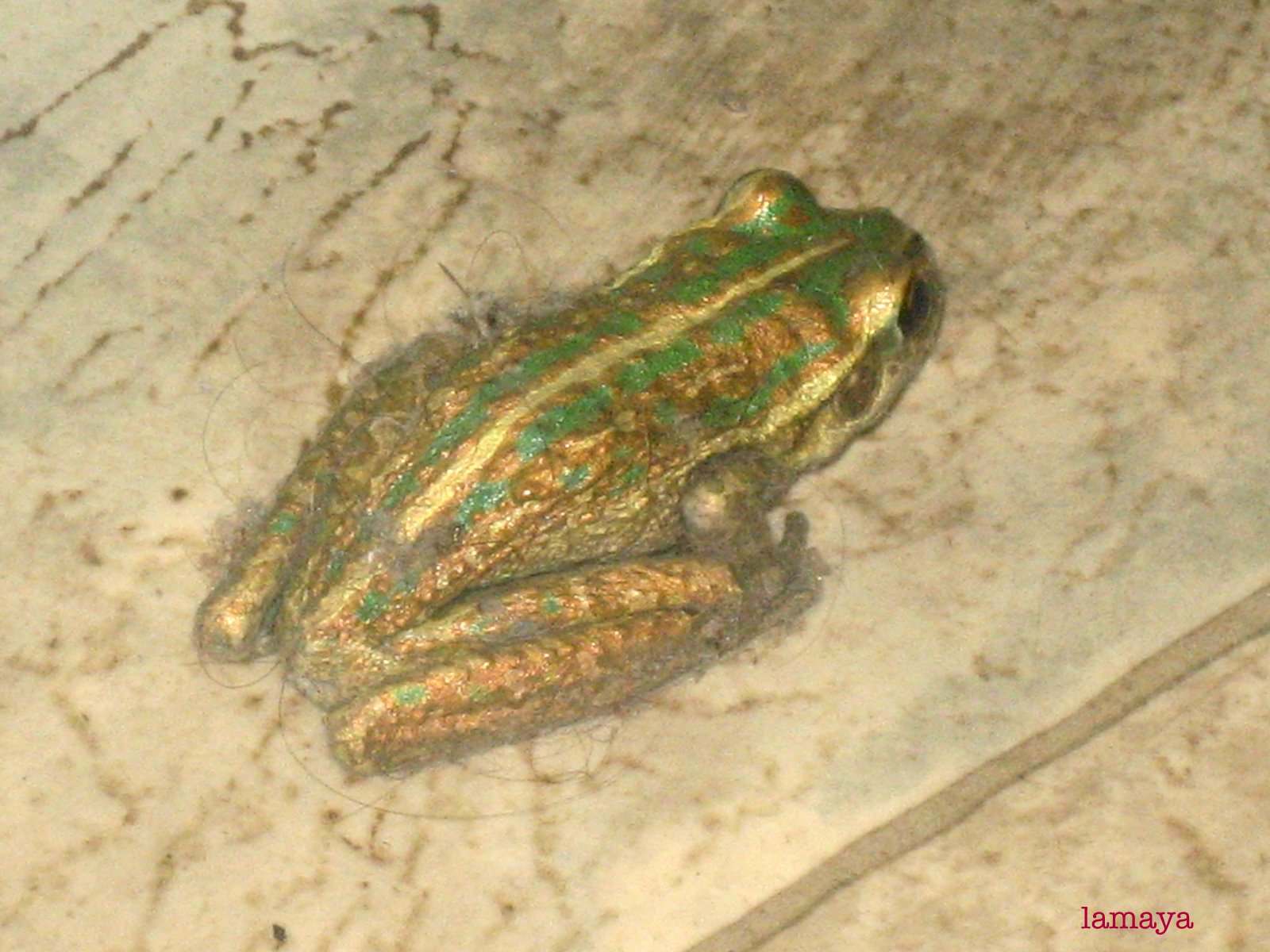
We based ourselves at the Pemberton Caravan Park.  Our ensuite cabin may not have been as luxurious as our room at the Karri Valley Resort, but we did get our own frog.  Since he was found hopping around the kitchen I wasn't sure if he was to be treated as a pet or as an entrée.  Once I finally caught him I released him back into the wild.  Actually, the Caravan Park was a very pleasant place to stay.  It is surrounded by tall trees and a river flows nearby.  Since we planned on being on the trails more than in the room it was a perfect place for us.
Of course, any trip to Pemberton wouldn't be complete without a visit to the Gloucester Tree.  The 61 meter  karri tree, which is located 3 km from the center of town, was once a fire lookout.  Today, thrill-seekers can visit the platform at the crown of the tree by climbing the pegs which, in 1946, were hammered into the tree's trunk to form a spiral ladder.
I decided to skip the birds eye view, since I could envision myself getting stuck half way up, and I didn't want to create a drama. Instead, as Mark gave it a go, I sat at the lovely picnic area. It wasn't long before I had company. However, my new found friend was not as well behaved as the parrot at the resort; this one was rather aggressive. So, if you're planning to visit and/or climb the Gloucester Tree you may want to picnic somewhere else.
There are actually a couple of other trees in the area that can be climbed, and you can get more information here.   By the way, I have heard that the view from the top is sensational.

Wednesday, July 28, 2010

The Many Faces of WA

The sun was climbing on the horizon and it was time to move on.  From our previous day's experience we assumed that the drive that lay in front of us would not take the 5 hours that we had planned on, but many more.  Unfortunately, we were not proven wrong as it took us close to 12 hours to reach our final destination.  
Fortunately, the trip was not fruitless. The long and sometimes windy road revealed the contrasting faces of WA.  Leaving the Pinnacles Desert behind us we headed towards the Southern Ocean.  We traveled through low heathland and eucalyptus open woodlands and past the concrete jungle towers of Perth's CBD and the majestic peaks of the Stirling range. The further south we traveled the less arid the land became.


Stirling Mountains WA
By mid-afternoon we were surrounded by the magnificent forest of karri, marri, and tingle trees.  Time was not on our side, and we were unable to stop and enjoy the clear, crisp air and explore the forests of the area.  Instead we were forced to observe and enjoy the landscape from the car.  As we watched the scenery flash by, we knew that we would some day have to return to the area to explore it in a more leisurely fashion.


Coastal Inlets Near Albany
The final leg of our journey took us from the larger, more traveled roads to smaller tracks.  The towering, green, moss-covered giants that lined the narrow bitumen path created a cave-like sensation.  Before us, in the few rays of light that reached the forest floor, thousands of white moths fluttered around the car.  Many of them were crushed to death against the windscreen of our moving car.
We were tired and anxious to arrive at our destination, since nightfall was just around the corner and with the darkness would come the wildlife.  When we arrived at the small town of Pemberton we knew that we were not far away, but I misread the map and prolonged our trip by more than just a few kilometers.  When we finally arrived at the Karri Valley Resort we were treated to the last few rays of light shimmering on the Lake Beedelup.


Lake Beedelup

Wednesday, July 14, 2010

Camping In Litchfield National Park

We were a bit worried about finding a camping spot at Litchfield National Park.  It had taken longer than expected to pick up supplies in Darwin and we would arrive at the park just as the sun would start to set.  As we approached Mt. Bachelor and its commercial campground, the last stop before the park, we had to make a decision.  We decided to keep moving.  If worse came to worse we could always backtrack to what looked like a typical caravan park.
In less than an hour we began the descent down a rough 4wd road to the more isolated campground at Florence Falls.  Our hearts dropped as we found the bush camp full.  The road made it impossible for caravans to drive in, so we imagined that the campgrounds on the sealed roads would be even worse.  Rather than carrying on to the fully developed campsite at Florence Falls we headed to the smaller one at  Buley Falls.  With fingers crossed we hoped that fewer facilities would mean fewer campers. Luck was on our side and we found two open spots--one next to the long drop and the other right at the campground entrance. Needless to say, we didn't spend the night next to the stinky loo.
The campground was typical for Australia with campsites right on top of each other.  We actually lucked out in that we only had neighbors on one side.  By the end of the night, even though we never met them, we knew more than we wanted about the two drunk girls camped next to us.  All the info we learned about them made it seem as if we were close friends, yet the several times we ran into the girls over the next few days they didn't even recognize us.
We quickly set up camp as the sky turned from yellow, to pink, to orange, a finally to dull grey.  We could hear the running water close by, but decided to save the exploring for morning since we were unsure about the crocodile situation.   As dusk turned to dark an eeriness settled around us. Perhaps it was my fear of crocodiles, or the crackle of the bush fires that smoldered just a few hundred meters away.  Whatever the cause there was no way that you were going to get me to sleep in the tent, and I soon retired to the back of the Toyota RAV4.   
As the first light peeked over the horizon, with coffee cups in hand, we headed down to the water pools.  It turns out that this part of the park is crocodile free and an extremely popular swimming area.  Fortunately, dawn was not a peak time to visit and we had the spot to ourselves.  As we sat next to the river, surrounded by pandanus palms and paperbark trees, with birds of prey circling overhead, I was once again reminded of why I have come to love Oz.  

As we returned to camp we were greeted by the dozen or so other campers slowly beginning to stir.  Not soon after the first cuppa was drunk and the big brekkie eaten, many of our neighbors began to break up camp.  We were faced with a decision--to leave camp set up and stay for another night or to pack it up.  We decided that even though the location was not ideal, we would stick it out for another night.  At the time it didn't seem like a big deal.  In fact, after seeing the croc free swimming holes in the daylight I was willing to sleep in the tent.  Also, we could take a short trail to the longer trail that we planned to hike.  This meant we wouldn't have to stress at the end of the day of finding a place to stay.  To top it all off we could have a riverside picnic that evening.  
Of course things didn't work out as planned.  The long distance trail was closed-- the land it traversed had yet to be declared croc free.  We ended up having to get in the car and drive to another section of the park to hike.  Unfortunately, we decided to leave our stuff at what was declared our base camp--a decision that would cost us a night in paradise...

Monday, July 12, 2010

Mother Nature's Bioreactor

Imagine a million, blindfolded, 11 year olds building a skyscraper that covers eight city blocks and measures 2 kilometers in height. A pretty horrific thought, but when accomplished by one of Mother Nature's creatures it becomes an amazing engineering feat.  
Visitors may be drawn to Litchfield National Park's waterholes, but they don't want to miss the area's magnificent termite mounds. We aren't talking about a few small ant piles, but rather a series of protective fortresses that are built with grains of earth that are cemented together with termite saliva. The park's landscape is covered with innumerable dirt structures that vary in size and shape. Visitors will see knee-high piles, football size cones, enormous buttresses, and towering monoliths. The distinct physical characteristic of each mound is determined by the species of termite that has constructed it. The largest of the mounds are built by the  cathedral termite and can measure up to 6 meters high. However, it is not the sheer size that is the most impressive feature of the mounds, but instead the fact that the atmosphere within the mound is maintained between 25 to 30 degrees celcius. This is accomplished through the use of evaporative moisture cooling systems, solar collection, and the use of thermal mass for heat retention. A monumental architectural feat for a soft-bodied, ant-like insect.
Wow, all of this without MIT degrees.  


Cathedral Termite Mound

A second species of termites found in the park are magnetic termites. Temperature is also a driving factor in the construction of their mounds. Rather than creating massive structures, the magnetic termites build an edifice that resembles an enormous, sculptural tombstone. However, it is not just the structure that is critical in the thermoregulation of the mound, but it also involves the careful alignment of the mound.  Hence all magnetic termite mounds are perfectly aligned, north to south. The structure and positioning of the mound allows the sun to warm a larger surface area during the cooler mornings, evenings and winter months, raising the internal temperature of the mound.  Then during the heat of the day, due to the mounds narrow profile, less surface area is exposed and less heat is absorbed.


Magnetic Termite Mounds


Profile Magnetic Termite Mound

Tuesday, July 6, 2010

Cool Fire

For tens of thousands of years the Aboriginal people of Australia have had a cultural obligation to look after and clean up the country.  One of the ways in which they completed this duty was through the use of fire--a tool that when used properly would create minimal harm while bringing maximum benefits.
Today, the National Parks of the Northern Territory are starting to realize the value of this ancient Aboriginal knowledge and fire is being used as a management tool to reduce the amount of fuel loads and to create firebreaks.  It is through the use of traditional patch burning during the cooler weather that the land and important historical sites can be protected from large, destructive wildfires later in the season.  It is also important to note that since traditional burning has been reinstated there has been an increase in native fora and fauna.

Since our visit to the Top End was during the cooler months of the dry season we saw several controlled fire burns.  As we entered Litchfield Park we were required to drive through a prescribed burn.  As we drove down the narrow road, the flames leaping toward the car, I couldn't help but wonder if our car rental insurance included third-degree burns.  It was also a bit eerie to sit at our campsite and not only hear the faint crackle but to see the smoke rising from the smoldering fires in the near distance--a stone throw from where we were to sleep.  As we drove and walked through the charred and sometimes burning landscape, I had to force myself to remember that it was not destruction that I was witnessing, but rather a temporary scar that in the long run will protect and encourage life.

"This earth.  I never damage.  I look after.  Fire is nothing. just clean up.  When you burn. new grass coming up.  That means good animal soon.  might be goanna. possum.  wallaby.  Burn him off.  new grass coming up. new life all over."
Bill Neidjie-Bunitj Clan

Friday, July 2, 2010

Salty vs' Fresh

Prior to visiting the Top End of northern Australia I didn't know a whole lot about crocodiles, except that the Land Down Under has some fierce ones--or at least that was the picture that had been painted in my mind.  So as we sped past the first Crocodile Safety sign at the side of the road in Litchfield National Park, I quickly pulled out the guide book to learn more about the reptile whose habitat I was about to enter.  It turns out that there are more than 20 types of crocodilians in the world, and two species are found in Australia: the freshwater and the estuarine or saltwater crocodile.


Freshwater crocodiles are only found in Australia.  "Freshies" live in freshwater rivers, creeks and plunge pools.  They are relatively small and rarely grow to more than 2.5 meters in length and weigh no more than 60 kilos.  The nocturnal predator, enjoys a diet of birds, bats, reptiles, insects, fish, and small mammals. They are considered to be a timid animal, though they can become aggressive and bite if they are disturbed.  Fortunately, their jaws are not large or powerful enough to cause serious injury to humans.
Estuarine crocodiles are found in Australia, South East Asia, New Guinea and Indonesia.  Saltwater crocodiles live in estuaries and the sea, but during the wet season they can move into freshwater swamps and rivers .  "Salties" are the world's largest living reptile and the males average a length of five meters and weigh about 450 kilos.   Their diets are similar to their freshwater cousins, however they may also eat snakes, turtles, and larger mammals (including water buffalos and humans).  It is important to note that less than 30 people have been killed by crocodiles since 1971, but they are still an opportunistic predator that will quickly strike without warning.


Today there is an estimated population of 100,00 crocodiles in Australia.  However, from the 1940's thru the 1960's the reptile was hunted, for its skin, to near extinction.  They are now a protected species and it is illegal to injure or harm them.
As the estuarine crocodile population grows, they continue to move further inland into freshwater rivers, billabongs and creeks in search of new territory.  Thus, the National Parks of the Top End have had to implement crocodile management zones.  These zones are only open during the dry season, and are accessible after the areas have been extensively surveyed and any "salties" that have moved in during the wet season have been removed.  Traps remain in place for the entire dry season as a saltwater crocodile may move in at any time.  So when visiting the Parks of the Northern Territory it it critical that all warnings and closures be followed.

Monday, June 7, 2010

Let The Rain Fall Down...

As I stood in the kitchen preparing our evening tea, a sudden flash lit up the dark horizon.  The unexpected burst of light was soon followed by a loud crack that caused the wall of glass windows to rattle.  Over the next half an hour I was treated to an orchestrated light show--a visual and aural experience that only Mother Nature could provide.
The show announced the arrival of the rainy season.  We had experienced a few sprinkles over the past few months, but the amounts of precipitation were minimal and not  enough to bring the earth back to life.  But the threatening storms that were now gathering on the horizon were different.  Even though I could barely make out the clouds in the dark night, I knew they were heavy with water.  Their arrival would bring the much needed moisture.  The  rains would reverse the destruction that had occurred during the long, hot summer.  The ugly, barren, hills that had been drained of life by the blaring sun and hot wind will soon become vibrantly alive.  The dry river beds once again will flow with water.  But with the deluge will come a different kind of destruction.  The hardened land is incapable of absorbing the amount of water that is about to arrive.  A lack of vegetation will lead to erosion as the strong down pour swiftly carries away the dirt.  Below the sheets of water, that connect the sky to the earth, puddles will quickly form and flood the roadways of the concrete jungle.
In the wake of the storm we will look past the destruction.  We will rejoice, because even though we are able to live with the dust and dryness, it is a countryside textured with life and color with which we dream.

Sunday, May 30, 2010

Who Is Knocking At My Door?

I awoke to the wind pounding at my door.  Mother Nature is announcing that winter has arrived.  However, it is not as though its arrival has not been expected.  Over the past few months the days have slowly become shorter and the temperatures have dropped. The gums trees have shed their skin, leaving bare trunks draped in strings of bark.  The vibrant colored leaves of the few deciduous trees are now brown litter on the sidewalks and, as I walk the streets of Adelaide, the crunch of my footsteps releases the earthy smell of their decomposing matter.


As I prepare to face my third winter here in Adelaide, I know that it will be very different from my winters back in Albuquerque.  Morning temperatures may occasionally near the freezing mark, but I will never find frost on my windows.   The day time temperatures will never require more than a light jacket, so my wool winter coat will remain in the closet.  Since snow is unheard of in these parts, the only blanket of white outside my doorstep will be on those few calm days when there is no wind, and the bay becomes engulfed by low-lying clouds.  However, those days will be few and most days I will find myself battling the Antarctic wind.  This wind is ferocious and it turns the bay into a tumultuous body of water.  The lulling sound of the calm summer waters is replaced by the pounding of thunderous waves crashing into the shore.  It is during the winter months that Mother Nature finds her voice and allows herself to be heard.
With the fast moving winds--the squalls--of the south come the rains.  The winter rains of Adelaide are unpredictable in form.  They may come as a drizzle, shower or down pour, but they are the defining element of the South Australian winter.  Unlike New Mexico, winter in Australia is not a season of hibernation.  Instead, it is during the shortest months of the year, below the darkened skies, that life returns to the drought ridden country.  It is when the clouds mask the sun and the first drop of rain begin to fall that the dusty and dry landscape once again becomes lush and green.  With just the smallest amount of precipitation, plants that had withered and ceased to grow during the hot summer months instantly come back to life.  The bright greens of the plants, trees and grasses are speckled with vibrant colored flowers.  The contrast of the stark grey sky with the myriad hues remind me of spring; but the constant cut of the antarctic wind keeps me in the present.

Wednesday, April 14, 2010

Plan B

Mark placed the open map on the dashboard and he tried to raise my spirits by showing me that just to the east of the Grampians lay the Black Range State Park.  He then pulled out some information that he had printed off the internet.  The description of the Black Range claimed that the park was a relatively quiet and remote area.  The only problem we could foresee was that it was located on a reservoir, and during peak tourist season water usually means hoards of people.  However, we also knew from experience that just because a map indicates a lake or a reservoir it doesn't always mean there is water especially in this part of the country where, after nearly a decade of droughts, many large bodies of water have decreased in size and in many cases become non-existent.  
We decided to give Black Range State Park a chance and took the 40 minute drive to the south-east.  The park boasts six camping areas, and we picked the one without facilities--we figured this would mean fewer people.  Our map indicated that we were to turn off of the North Grampians Highway onto Brooks Road.  Good thing we had a map, since there was nothing indicating that there was a campground at the end of the track.  We were a bit concerned by the lack of signage, but it was obvious that the dirt road had recently been used.  Ten minutes down the road we found an open bush camping area.  A sign indicated that we could camp wherever, as long as we stayed 10 meters above the water line.  Not that we had to worry about that since, as we had predicted, the reservoir was dry.  To my relief the entire area was vacant and we had found the solitude that we longed for.  Now the only question was, would it remain this way?  It was only 11:00 in the morning and the "campground" could easily fill up as the day progressed.  However, the area was large, and even if the crowds arrived, it would be easy to find a quiet corner.  Rather than setting up camp, we decided that we would go and hike just down the road and find the perfect spot when we returned.  That way we would be sure not to have any immediate neighbors.

Dry Reservoir

Five hours later when we returned we found the campground as empty as when we had left it.  That night a near full moon served as our nightlight and a few grazing kangaroos were our only companions.

Solitary Bush Campground

Early the next morning, just before the sun peeked over the horizon, we were awakened by a cacophony of sound.  With over 100 bird species recorded in the park the variety of chirps, cries, hoots, laughs, peeps, shrieks, trills, tweets, warbles, and whistles was amazing.  The symphony that came from the tree to canopy was unlike anything I have ever heard.  I couldn't help but wonder if it was this music that kept the early explorers marching as they pressed on looking for that great inland sea.  Did they believe that for there to be so much life there had to be a huge source of water?  Or was there the disbelief that brightly colored, exotic parrots, rosellas, lorikeets, and cockatoos could not exist in a desert, that there had to be something else? We considered that, perhaps, instead of the songs of the wild giving them hope--the laugh of the kookaburra that drove them mad?


Over breakfast, we decided that we had discovered a mini-bush paradise and that we would use our current location to continue to explore the area.

Thursday, April 8, 2010

Don't Plan On It

Our plan of spending the long Easter weekend on the historic Birdsville Track was destroyed by recent storms.  Not only had the dirt road been washed out, but much of the area was still under water.   The track isn't scheduled to fully re-open until the end of June.  So we were faced with what to do with a 4 day weekend and a 4wd.  
As we tried to make a plan, we discovered that many campsites--especially those on the coast or in the mountains--required reservations.  Of course, as we began to make phone calls, we found that everything had been booked out months ago.  We switched our focus to some of the more isolated inland State Parks.  We found two parks near the South Australia/Victoria border that didn't require reservations.  We figured that the large parks, which had plenty of dirt and scrub but lacked in water and facilities, wouldn't be  coveted vacation spots.  Each park boasted several longer bush hiking trails and we figured we could keep busy for a couple of days. Unfortunately, the treking would consist of crossing sandy, flat ground.  
After hours of pouring over regional maps, it was determined that we could throw in a bit of a challenge by stopping off at the northern edge of the Grampians--a mountain range famous for its rugged rock outcrops--to hike Mt. Zero.  We planned to take the longer trail from the Stapylton campground.  We figured if we arrived early enough on Friday morning, the first day of school holidays, we wouldn't have a problem securing a camping spot.  Also, this campground offered no facilities, which from our previous experience made a campground non-popular with families.
Our journey began Wednesday at noon.  Our first stop was the Little Desert Campground.  We were encouraged when we landed a riverside campsite.  There was only one other large group in the campground.  We kept our fingers crossed that our luck would continue as we set out early the next morning.  As we pulled into the  Stapylton Campground we realized that in our planning we had forgot one important fact, where there are rocky cliffs there are rock climbers.  Every Uni student from the state of Victoria and South Australia had converged in this one campground.  Colorful tents filled the area like sardines packed in a tin can.  If we had wanted we could have found a spot to squeeze in our tent, but when in the bush I like to listen to the  wildlife rooting around, not to my neighbors root.
At this point, sensing a melt down,  Mark pulled the RAV over in the day use parking area.  As he pulled out the map he calmly announced that he had a Plan B.