Thursday, August 12, 2010

Red, White, and Blueberry Pie

Celebrating Holidays, when the seasons are opposite to what one is used to is a bit difficult.  On this blustery winter morning in August I can't help but want to put on some Christmas Carols.  Fortunately, this year for the 4th of July--even though it is not a holiday here we take a moment to remember our independence--Mother Nature was a bit more cooperative.  It wasn't warm enough to break out the bikinis but we were able to have a picnic at the beach.  As I planned the menu (Veggie Sticks with real sour cream and chive dip, American Style Hot Dogs which we are skipping next year, Potato Salad--Granny's traditional Recipe, Budweiser--Dad that one was for you) I was stumped for a perfect dessert.  I wanted something light and refreshing.  There were strawberries in the store, but they were coming from halfway around the world and I prefer to keep my produce a bit more local.  I ended up going with a Blueberry Pie, at least I could buy local produce that was frozen.  I followed a recipe from Cook's Illustrated, and ended up with one of the best blueberry pies ever.  I ended up making a very small pie because, even though the berries were frozen, they remain a hot commodity in this part of the world.  However, if you live in the Northern Hemisphere and are like my parents you may have blueberries coming out of your ears so I have decided to share the adapted recipe.  Enjoy!!!


This recipe is for a small pie, so you probably want to double the recipe for a regular pie.  You can find the original recipe in Cook's Illustrated July 2008 edition.

Pie Dough
1 1/4 cups unbleached all-purpose flour 
1/2 teaspoon table salt
1 tablespoons sugar
6 tablespoons cold unsalted butter, cut into 1/4-inch slices
1/4 cup vegetable shortening , cold, cut into 2 pieces
1/8 cup vodka , cold 
1/8 cup cold water

Blueberry Filling
3 cups frozen blueberries
1/2 Granny Smith apple , peeled and grated on large holes of box grater
1       teaspoons lemon juice 
1/3 cup sugar (5 1/4 ounces)
1 tablespoons tapioca flour (can substitute ground quick cook tapioca)
         Pinch table salt
1 tablespoons unsalted butter , cut into 1/4-inch pieces

Instructions for Pie Dough
In a large bowl combine half the four, salt and sugar until combined.  Add butter and shortening and cut until the dough resembles cottage cheese curds.  Add the remaining flour and mix.  Sprinkle vodka and water over the mixture.  Fold in until the mixture sticks together.  Divide the dough into 2 parts, flatten into a disk, and refrigerate for an hour.

Remove 1 disk from refrigerator and roll out so that it is 2 inches bigger than your pie dish.  Place dough in dish and leave any dough that is hanging over.  Place in refrigerator while preparing the filling.

For the Filling
Place half the berries in a saucepan.  As you cook them on medium heat mash the berries to release their juices.  Continue to cook, stirring frequently and mashing occasionally, until the mixture is thickened and reduced by about half.  Let cool.

Preheat oven to 400

Place grated apple in a clean towel and wring.  Transfer to a large bowl.  Add cooked berries, defrosted uncooked berries, lemon juice, tapioca flour, and salt.  Mix until combined.  Transfer the mixture to the dough-lined pie plate.  Scatter butter pieces over filling.

Roll out second disk of dough.  It should be a bit smaller than the first piece.  Use a cookie cutter or hand cut a star in one of the corners.  Place dough over top of pie.  Leave the overhanging dough.

Using knife trim the overhanging dough, leaving it flush with the rim of the pie plate.  Flute edges using the tines of the fork.  

Bake pie for 30 minutes.  Reduce oven temperature to 350 degrees and continue to bake until juices bubble and crust is deep golden brown about 30 minutes longer.  Transfer pie to wire rack and cool to room temperature.

Wednesday, August 11, 2010

The Maritime Museum In Western Australia

Australia is a country with strong ties to the ocean, so it only fitting that Western Australia has a world class Maritime Museum.  The museum is located a short 30 minute train ride from Perth's CBD, perched on the shore of the Indian Ocean in Frematle.  
Visitors are invited to explore the role the ocean has played not only in the development of this young country, and its current role in its life today.
The museum beautifully showcases Western Australia's strong fishing industry which is traced back to the use of Aboriginal fish traps. Stories from the past and present are included to demonstrate the challenges and successes of the local fishing communities.
A long term exhibit demonstrates the important role trade has played for thousands of years, ranging from the exchange of simple products and ideas by the people living on the borders of the Indian Ocean to the more current globalized trading, where thousands of cargoes are brought into the Australia through maritime trade.
There is a gallery that focuses on the stories of bravery, war, peace, sacrifice, weapons and naval defense.  Here, visitors learn the strategic importance of Fremantle.
Of course, a Maritime museum would not be complete without a display of watercraft, and guests are treated to an array of vessels.  Needless to say the pride and joy is the Australia II, the racing yacht that won the America's Cup in 1983.  

Victoria Quay, Fremantle
Open daily: from 9.30-5.00, excluding Wednesdays.
Closed Christmas Day, Boxing Day, New Years Day, Good Friday, Easter Monday and Anzac Day.
Public information phone number  +61 [0]8 9431 8444

Tuesday, August 10, 2010

The Dark Side Of Guanajato

The other day as I was walking around Perth I saw a billboard advertising an exhibit at the Western Australian Museum. As I looked at the picture I was transported to another time. No, not to 79 AD when Pompeii was buried under several meters of ash, nor to our 2005 visit to the historic ruins. I was taken back 16 years to what was Mark's and my first trip together. We both were seasoned travelers. As such, we brought diverse experiences and expertise to the trip. However, where we really varied was in our expectations of the experiences that we desired as we traveled south of the boarder to the largest city in the world and its neighboring state of Guanajuato.
I envisioned culinary feasts at small cafes and restaurants. Mark looked forward to the delicacies bought from the street vendors (an amoeba or two thrown in at no extra cost). The romantic in me wanted to find accommodations at renovated historic buildings, mansions, and villas, places steeped in history and mystery. Mark was after convenience. The closer we were to the bus station, the less distance we had to lug our luggage. I could spend hours on end at the markets, looking at the exotic foods and spices and the endless quantity of textiles and ceramics. Mark felt shopping was a four letter word and was ready to hit the local cantina.
After a week of fits, tantrums and compromise, when we pulled into the city of Guanajuato and, after finding a convenient hostal that didn't rent rooms by the hour, we knew it was time to let someone else take over the decision making for us. We justified a full day tour by signing up with an operator who spoke only Spanish--it would be good language practice. So, we had a jam packed day of visiting churches, plazas, gardens, theaters, mines, and the University. We were driven up the steep hill to the Mirador (lookout) where we were able to admire the city below. We enjoyed a yummy lunch at a typical restaurant where we were able to practice our Spanish with our fellow travelers. Then at the end of the day we were taken to what our guide claimed was the highlight of the trip--the Mummy Museum. It should be noted that Mark and I are not fans of horror and/or death, and we weren't thrilled about the prospect of having to walk around a building that housed a bunch of human remains. However, it was part of our tour and we sucked it up. Our visit began with the history of the local scene and how the mummies came to exist.
The naturally occurring mummified corpses (mumification owed to the characteristics if the soil in which they rested) were all victims of a Cholera outbreak in 1833, during which time bodies were buried immediately in order to control the spread of the disease. Unfortunately, some burials occurred prematurely. Expressions of horror frozen on the corpses faces suggested that they may have been buried alive--a reminder of the horrific and tragic ending of a living life.
The mummies in the museum were disinterred from the Guanajuato's Graveyard between 1865 and 1958 when  family members could no longer pay the tax required to keep the bodies in the cemetery. Not all the disinterred bodies were mummified, but the 2% that were, were stored in a building and eventually they began to attract tourists.
With the brief history lesson over, we were invited to stroll through the narrow passageways at our own pace to enjoy the exhibit.  Because the museum had started out as a storage facility, the bodies are not displayed with dignity, and it didn't take long for Mark and I to become spooked;  we decided we needed to get out of there pronto. As we ran through the narrow, dark passages past over 100 mummified bodies, our own faces mimicked those surrounding us.  However, our contortions were not from agony, but rather disgust.
When we were finally able to escape the building and sit in the warm sun on the plaza, we knew that even though our future travels would involve plenty of comprise there would be no more visits to mummy museums.

Monday, August 9, 2010

Tasty Green

One of the biggest problems that we have faced in WA, other than distance, has been eating out.  Not only has food been extremely expensive, but for the most part the quality has been a disappointment.  In fact, I have probably been served some of my worst meals here in Perth.  In trendy Subiaco, I ordered a warm mushroom salad and was brought a bowl of mushrooms swimming in a sea of sherry without a green to be seen--can you say gag.  At another historic eatery, famed for its meat, I was served a gourmet burger that took me back to the hamburgers served at my elementary school cafeteria.  I am sorry, just because the the beef is Wagyu doesn't mean you can charge AU$25 for a compressed patty that resembles a char-burned shoe sole.
After our first couple of visits to the city and trying a variety of eating venues, we had to turn to pub food.  At least we knew what to expect, even if it was over priced.  Then on our visit last January, someone suggested that we try one of Perth's newest eateries, The Greenhouse.  I was a bit skeptical as I listened to the rave reviews about the amazing, funky fresh, organic food--but we decided to give it a try.
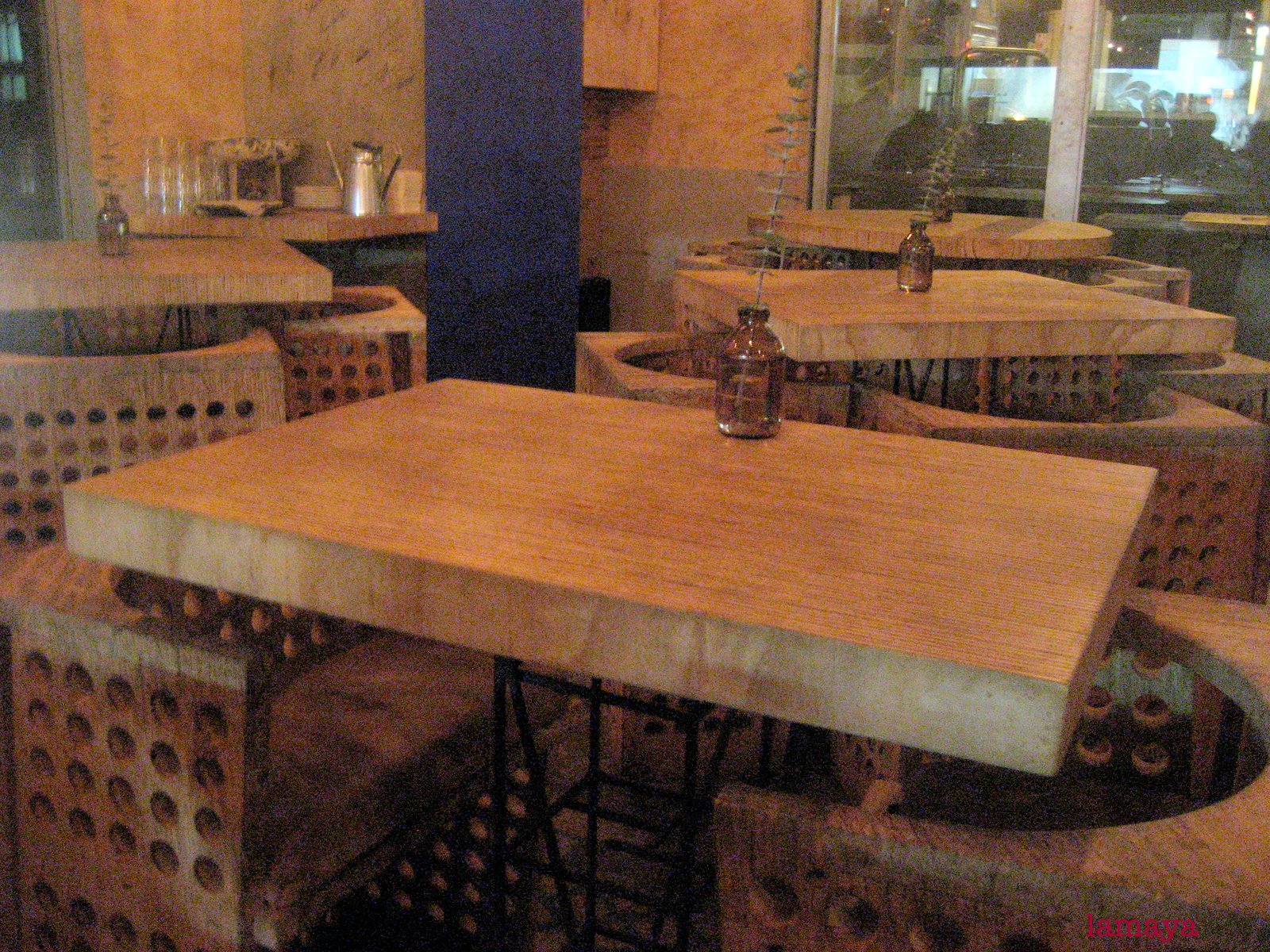
When we arrived at the Green House, I knew we weren't in your normal run of the mill type of place.  The owner's strong eco focus can be seen the moment you pass through the door.  The space and furnishings have been constructed with recycled materials.  However, even though I was impressed by the use of recycled and recyclable materials--I was there to eat.

Service was prompt and friendly.  The menu, which featured small plates, was simple but varied.  We decided to try four plates: lamb kofta, duck rillette, fried cauliflower, and  piquillo croquetas.  All I can say is that when the food arrived it exceeded our expectations.  It was obvious that the Chef knows his trade.  He took simple, quality ingredients and made some excellent non-pretentious plates that looked beautiful and tasted great.  At last we had found a restaurant in Perth that meet both our needs and tastes.

Sunday, August 8, 2010

A Birds Eye View

This past summer, January in Oz, we once again found ourselves amongst the giant karri trees.  The summer heat in Perth was full on so we decided to try and escape it by making the long drive down the moss covered forrest.  Of course, like with our previous visit, we didn't have enough time but, once again, we were enchanted with the area.


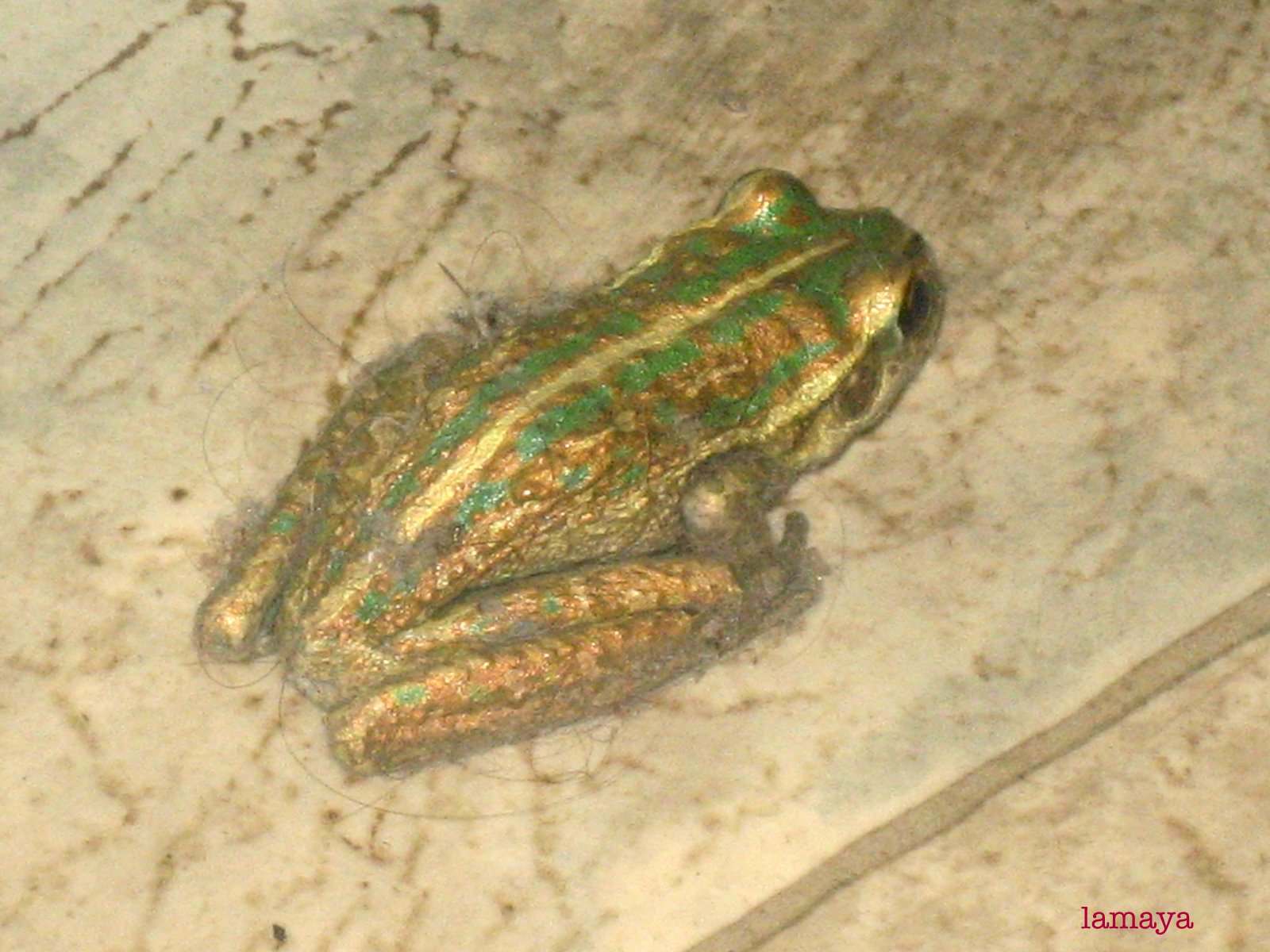
We based ourselves at the Pemberton Caravan Park.  Our ensuite cabin may not have been as luxurious as our room at the Karri Valley Resort, but we did get our own frog.  Since he was found hopping around the kitchen I wasn't sure if he was to be treated as a pet or as an entrée.  Once I finally caught him I released him back into the wild.  Actually, the Caravan Park was a very pleasant place to stay.  It is surrounded by tall trees and a river flows nearby.  Since we planned on being on the trails more than in the room it was a perfect place for us.
Of course, any trip to Pemberton wouldn't be complete without a visit to the Gloucester Tree.  The 61 meter  karri tree, which is located 3 km from the center of town, was once a fire lookout.  Today, thrill-seekers can visit the platform at the crown of the tree by climbing the pegs which, in 1946, were hammered into the tree's trunk to form a spiral ladder.
I decided to skip the birds eye view, since I could envision myself getting stuck half way up, and I didn't want to create a drama. Instead, as Mark gave it a go, I sat at the lovely picnic area. It wasn't long before I had company. However, my new found friend was not as well behaved as the parrot at the resort; this one was rather aggressive. So, if you're planning to visit and/or climb the Gloucester Tree you may want to picnic somewhere else.
There are actually a couple of other trees in the area that can be climbed, and you can get more information here.   By the way, I have heard that the view from the top is sensational.

Saturday, August 7, 2010

Mother Nature Showing Her Color


This week's PhotoHunt theme is colorful.

There were many choices for this week's theme, but I decided to showcase Australia's most famous natural icon.  These colorful pictures were taken at Uluru (aka Ayers Rock) at sunset.   It was a remarkable site to watch the giant monolith change colors as the light from the setting sun struck it.  
Uluru is a large sandstone rock formation in central Australia.  It measures more than 348 m high and 9.4 km in circumference.  However, it is interesting to note that the formation extends several kilometers below the surface of the ground--so visitors can only view a small section of Uluru.
The inselberg, or island mountain, is an isolated remnant left after the slow erosion of an original mountain range.  The remarkable feature of Uluru is its homogeneity and lack lack of jointing and parting at bedding surfaces, leading to the lack of development of scree slopes and soils.  

Friday, August 6, 2010

Karri Valley Resort

Our arrival at Karri Valley Resort was not without drama.  We were tired and hungry, but were informed that if we wanted to eat in the restaurant we had less than half an hour before the last sitting.  We had envisioned a hot shower followed by a cold beer on our lake side balcony, but this wouldn't happen if we wanted to eat a warm meal. It had been a long day and we were both cranky, so we decided to skip the fine dinning experience and have a lakeside cold meal of surf and turf--tuna and beef jerky raided from our hiking provisions.  As we sat on our private balcony overlooking the Beedelup Lake it was soon became apparent that we had not been the first people to enjoy such a picnic as we were soon joined by an Australian Ringneck Parrot.   In the end we were happy with the dinning choice.  We couldn't have had a better view or been in a more peaceful location.


As night fell, our eyes drew heavy and we soon turned in.  I am not sure if it was the fact that Beedelup is derived from the Noongar word Bejalup meaning place of sleep or the 12 hour drive, but no sooner had our heads hit the pillow were we fast asleep.
We awoke early the next morning anxious to explore the surrounding forest.  We decided on a short pre-breakfast walk among the giant Karri trees.  I am not exaggerating when I say giant, since this variety of Eucalyptus tree can grow to be 90 meters tall.  A short path up one of the surrounding hills took us up to the Walk-Through Tree.  The 400 year old tree, which is over 75 meters tall has a 3x4 meter hole cut into its base.  It was pretty impressive to stand inside the tree knowing that there are more than 150 tons of tree above you.

After breakfast we returned to the forest.  Unfortunately, we didn't have a lot of time to spend on the trail since we had a long, almost 400 km, drive back to Perth.  But, we did spend a few hours walking through the damp and misty timberlands.  The understory was very lush and green.  A moss covered trail took us around the lake to Beedelup Falls.  Here we crossed a swing bridge which took us over the Beedelup Brook and provided a full on view of the water flowing over 100 meters over steep granite rocks.  The waterfall itself was not that impressive, however, we were astounded by the amount of water.  After all, this was not what we had imagined from the arid land of Western Australia.  As our time in the southern forests of WA came to an end we knew that we would return to spend more time exploring the area.