Tuesday, April 13, 2010

carSpain

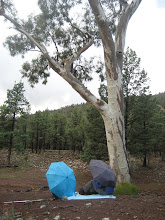
We may have paid no heed to the Teacher Exchange Program's advice not to swap houses, but we did draw the line at exchanging cars.  It wasn't so much that we were concerned about what could happen--though I am sure Mark had run through all types of scenarios in his head--but more because we did not want to drive while we were in Spain.  Neither of us like to drive, and part of the draw of living in Europe was the accessibility of public transportation.
At first we thought that since we would not exchange vehicles that the swap might not happen, especially, since Lily would pretty much need a car to make the 8 mile commute to the school where I taught.  There was the possibility of taking a public bus, but that involved several transfers and leaving the house at 6 am.  We pointed this out, but Lily had a bit of a lackadaisical attitude.  I don't think she any idea of how spread out everything is in New Mexico.  Fortunately, some of my co-workers agreed to give hear a ride to and from work--which was my main concern.  Eventually, someone leant her an old beater that would get her around town--this  kindness was repaid with several hundred dollars of unpaid parking tickets.
So with Lily's transportation solved, I just had to worry about myself.  This proved to be a bit difficult because I would be working in a small pueblo about 50 minutes outside of Murcia where Lily's house was located.  It was possible to take a bus, but that would mean a 30 minute walk to the bus station.  Like Lily, luck was on my side and the people with whom Lily carpooled agreed to take me along.  This was a bit of a burden for them, since normally each participant would drive one week out of the month.  Being car-less, I was not included in the rotation.  Instead, I would contribute money for gas and expenses.
Of course, I was never provided with the phone numbers for the people in the carpool.  I was told to wait for them outside of the apartment, on the 1st of September, the first day we were to report to school.  The pickup was supposed to occur at 8:00, and I headed downstairs early.  At 8:30 I was still standing and waiting.  As we didn't have students for the first couple of weeks  I wasn't too stressed.  At 9:00, I finally went back upstairs to call the School Director.    While he had me on the land line, he called up the others who were in the carpool.  It turns out since the 1st was on a Friday, they had decided not to report to school until Monday.  So It would be a long weekend before I was to meet the people with whom I would be spending about 10 hours a week over the next 9 months.

Saturday, April 10, 2010

Well Preserved


This week's PhotoHunter theme is "vertical".

This hole measures 1.8m x 1.2m and drops vertically over 58 meters (200 feet) into the ground.  The original timber-lined shaft was built in the 1870's.  It is located in the 270,000 hectare Ngarkat Conservation Park in South Australia.  It is the last surviving well, a relic of local pastoral history, in the Pinnaroo district.  

Thursday, April 8, 2010

Don't Plan On It

Our plan of spending the long Easter weekend on the historic Birdsville Track was destroyed by recent storms.  Not only had the dirt road been washed out, but much of the area was still under water.   The track isn't scheduled to fully re-open until the end of June.  So we were faced with what to do with a 4 day weekend and a 4wd.  
As we tried to make a plan, we discovered that many campsites--especially those on the coast or in the mountains--required reservations.  Of course, as we began to make phone calls, we found that everything had been booked out months ago.  We switched our focus to some of the more isolated inland State Parks.  We found two parks near the South Australia/Victoria border that didn't require reservations.  We figured that the large parks, which had plenty of dirt and scrub but lacked in water and facilities, wouldn't be  coveted vacation spots.  Each park boasted several longer bush hiking trails and we figured we could keep busy for a couple of days. Unfortunately, the treking would consist of crossing sandy, flat ground.  
After hours of pouring over regional maps, it was determined that we could throw in a bit of a challenge by stopping off at the northern edge of the Grampians--a mountain range famous for its rugged rock outcrops--to hike Mt. Zero.  We planned to take the longer trail from the Stapylton campground.  We figured if we arrived early enough on Friday morning, the first day of school holidays, we wouldn't have a problem securing a camping spot.  Also, this campground offered no facilities, which from our previous experience made a campground non-popular with families.
Our journey began Wednesday at noon.  Our first stop was the Little Desert Campground.  We were encouraged when we landed a riverside campsite.  There was only one other large group in the campground.  We kept our fingers crossed that our luck would continue as we set out early the next morning.  As we pulled into the  Stapylton Campground we realized that in our planning we had forgot one important fact, where there are rocky cliffs there are rock climbers.  Every Uni student from the state of Victoria and South Australia had converged in this one campground.  Colorful tents filled the area like sardines packed in a tin can.  If we had wanted we could have found a spot to squeeze in our tent, but when in the bush I like to listen to the  wildlife rooting around, not to my neighbors root.
At this point, sensing a melt down,  Mark pulled the RAV over in the day use parking area.  As he pulled out the map he calmly announced that he had a Plan B.


Wednesday, April 7, 2010

Here Comes Peter Bilby

Last week there were a lot of these little guys around Australia. If you look closely at the picture you will see that this is not your typical Easter Bunny. Rabbits are not native here in Australia, and they have been very destructive to the natural habitat.  However, we do have the bilby.  Many local companies have chosen to use this nearly extinct animal as the new Easter Mascot.  
The bilby, which can weigh up to 2.5 km, is the largest member of the family of marsupials called bandicoots.  Its silk soft fur is blue-grey in color, and it has a black tail that dons a white tip. It has a long pink snout.  The diet of the bilby consists of seeds, spiders, insects, larvae, fruit and small animals.  It receives all of the water it needs from the food that it eats
The bilby and rabbit are similar in that they both have large ears and live in burrows.  However, the bilby's ears are very flexible and they can be rotated, placed flat against or perpendicular to the body, and even folded in half.  Also, the bilby is a truly nocturnal animal and it only comes out an hour after dusk and it returns to its underground home at least an hour before dawn. Its home being one of a dozen--2 meter deep-- burrows that it has built with its strong forelimbs and long claws
 Before the arrival of the Europeans in Australia the bilby could be found across 70% of the Australian continent.   Presently they are found in a small area in south-west Queensland and in isolated colonies spread across Western Australia and the Northern Territory.  Their extinction in the other mainland states has been attributed to loss of habitat, hunting, competition from introduced species, and predation from introduced species.

Monday, April 5, 2010

A Rough Start

So far my first week in Burra had been a bit of a struggle.  The majority of my classes were with older students.  I knew that would be the case when I accepted the position in the Teacher Exchange Program, but I was confident that I could adapt my teaching to suit my students' needs.  However, it was turning out to be more of a struggle than I had anticipated.  I knew it would take time.  But now I was about to enter the class that I had been waiting to meet all week--a group of 6 and 7 year olds.  Teaching first and second grade was where I had the most experience and I was about to walk into my comfort zone.
I knocked on the door and was greeted by a raspy "entra."  As I entered the room, Mary was slowly rising from her desk.  With a cigarette in hand she began to sashay towards me.  She stopped at my side and introduced me to the class as the English teacher.  She then took one final puff, and while blowing the smoke in my face she let out a chuckle and wished me luck.  I was a bit taken aback, but as the door slammed shut my attention was drawn to the class that sat in front of me.
21 pairs of eyes quietly watched me as I began a more formal introduction.  Like with all young children and foreign language classes, the start was a bit slow.  However with patience and props we were off to a good start.  Suddenly, a little girl stood up and started yelling at me that I needed to speak in Spanish.  Within seconds the blonde haired, blue eyed, ring leader had the entire class chanting "En Español" while banging their pencil cup on the desk.  Now I may have been a newbie in this school and country, but I had had years of experience with many difficult classes.  I had gone through a very progressive teacher training program where I had been provided with a "toolbox" of a variety of discipline strategies.  I quickly began rummaging through that box, but I couldn't manage to find the appropriate tool to fix the problem.  In fact, the students had turned from chanting and pounding to throwing things across the room.  As I began to panic, I switched to Spanish and continued my struggle to get the group under control.  Unfortunately the situation continued to get worse and, before I knew it, I had students on tables, under table and running around the room screaming.  With over 40 minutes left in the class period I had no idea what I would do.  Just then there was a knock on the door and to my horror the Director poked his head in.  All I could do was say, "Don Beschit, I think we have a problem."
I then stood in horror as I watched him pull students ears, slap knuckles and yell at the top of his lungs--all tools I wouldn't have found in the remotest corners of my tool box.   With order restored and under the watchful eye of Don Beschit I was able to successfully finish my lesson.  However, I couldn't help but wonder how on earth I was going to survive the school year.

Saturday, April 3, 2010

In A Glass Of Its Own


This weeks PhotoHunter theme is "sweet."

Last year while on a wine tour in Western Australia I was able to try some wonderful Ports--a sweet red wine.  Even though they weren't authentic Port, since they aren't from Portugal--they were still tasty.  
At one winery they served the strong, fortified wine in a unique glass.  You sip the spirits through a small spout.  The narrow opening of the glass and the fact that the liquid is sucked from the bottom of the glass reduces the oxidation of the beverage. The glasses were also designed so that your hand warms the spirits as you slowly enjoy your drink.  

Thursday, April 1, 2010

Jueves Santo

Every year in February, the late night "marcha" of Southern Spain takes on a different tune.  Dozens of young men take to the streets to practice carrying large wooden tables throughout the streets.  These tables, or pasos, will carry ornately decorated religious icons through the streets during the Holy Week of Easter.  When fully adorned, the pasos can weigh over 2,000 kilograms, and are carried on the backs of 20 to 30 costaleros.  Due to a skirt that surrounds the base of the paso, the costaleros are unable to see where they are going.  Thus, they take to the streets several months before Semana Santa to practice the basic maneuvers of lifting the table, moving forward, turning, stopping and setting the down the paso all in response to instructions given through the beating of a stick.  Practice is often accompanied by a small section of  church marching bands or a single trumpet.  During the late months of winter, it is not uncommon to hear the lone call of a trumpet announcing the imminent arrival of the Easter Celebrations.
Little did I know that February of 2008 would be the last time I would have the privilege of  the seasonal experience of stumbling across the costaleros practicing their perfectly coordinated moves through the narrow winding streets, and that I was about to experience my final Easter in Utrera.